A program of recovery available to all people who wish to reduce the harm they do to themselves, or others. This way of life has kept me from returning to daily use of Fentanyl and other opiates since 09/16/2024
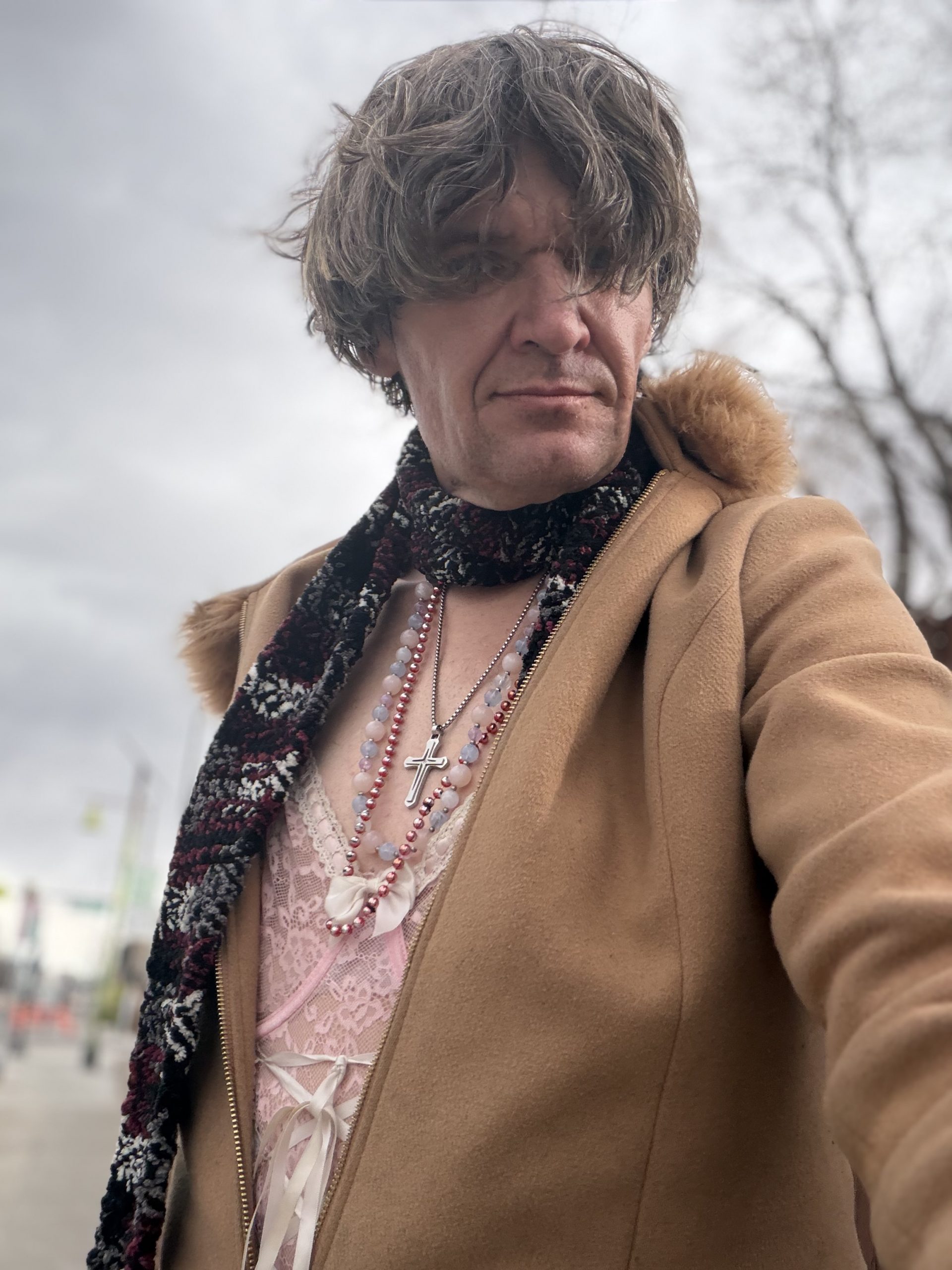
Narrative of Holly Rose Wynter creator and user of the RAID Philosophy
Flames: A Testimony of Identity
Part I: The System’s Name
My legal name in the United States is Casey Joshua Burton. But names are just labels, and for a long time, the labels attached to me were designed to destroy rather than define. It took a long time to navigate through the lies, and deceptions surrounding who I am.
It was around the age of 24, that I was able to discover my birth mother. I was taken from her because she was told a lie, that a family more deserving, and able to provide a better life would be a better outcome than raising the child God had blessed her with. My birth name was Joshua David. I would not understand the significance of that name until 26 years later.
I started to not appreciate the way I was being treated by my adoptive family at the age of 15, and was emancipated by the same state that had arranged my slavery at the age of 17. It was the word they used free me from my abusive family that would completely abandon me because I was not the perfect person they expected me to be, they wanted a white baby, and were given a Jewish/ Christian baby instead. Why would catholic social services, and child protective services have been so overwhelming to force a teenager that suffered the same bipolar disorder her child would be diagnosed with. I blamed my mom for years, until I realized that she was just as much a victim as I was. Needless to say after the abuse I suffered as a child, I shouldn’t have even attempted to be a father, but at least I tried, and for a moment I was a father to my child. That came to a screeching halt in 2004. I was arrested and investigated for a crime I never committed. Although the crime that tore my family apart, was never brought to charges, I was guilty of a lesser crime.
It began in earnest in 2008. My conviction landed me in a heap of trouble and a lengthy probation sentence. I lost visitation with my child and alienated most of my family. During this time, I was labeled a drug-addicted individual with bipolar disorder. My probation officer at the time mandated me to twelve-step recovery. It was during this time that I took on the identity Serenity Rose and had back-to-back years of recovery by applying the twelve steps to my life.
I struggled under the weight of it. I relapsed on heroin, was revoked, reinstated at the three-year mark, and finally completed probation in 2015. But the dance wasn’t over. My Probation Officer cut a deal with the District Attorney. They revoked me again, but this time, the offer was ninety days in jail rather than another two years of incarceration. I did my time and was released on February 14th, 2015.
After being released from the system, I went back to San Diego. I was able to maintain a couple more years of recovery before discovering that indeed I was addicted to a drug—but it wasn’t a street drug. It was a medication used in the treatment of my bipolar disorder, and it was prescribed. In the process of participating in a drug study for a new bipolar disorder treatment that had reached the human testing phase. I discovered that without taking Seroquel, I couldn’t sleep. It took becoming addicted to heroine for me to be able to sleep normally again.
Part II: The Paradox of Portland (2023)
By 2023, I was living in Portland, Maine, residing in Florence House. My “home” was a tiny partitioned space with a locker—a holding pen for humanity.
Yet, in the midst of this, I found a spark of purpose. I began working for Common Space (formerly known as AMISTAD). For the first time in years, I wasn’t just a case number; I was a healer. I was trained in wound care, first aid, and HIV and Hepatitis testing. I was good at it. I advocated fiercely for the unhoused, fighting against encampment sweeps, arguing that I was functioning better psychologically on substances from the street than I ever had on their psychiatric medications. Marijuana helped my social anxiety, and a little amphetamine helped my ADHD and kept me from experiencing the worst of the lows that accompany the depressed state of bipolar.
But the rot was in the walls there, too. We faced opposition from politicians and hatred from the neighbors. Then came the tragedy of “G.” My coworker committed suicide shortly after our supervisor was terminated. Though the official story was a resignation, I suspected it was about funds secured to hire homeless addicts being redirected to the sober livings the company operated—a direction she wasn’t onboard with.
In the aftermath, upper management offered us what looked like an olive branch: we were paid to stay home. We sat in our rooms, collecting checks, too distracted to realize we were being silenced.
I was terminated the same day that I found out about “G’s” passing; the rest of my team was terminated the day of her funeral. It was a severe blow to my mental state. But things were going to get far worse. I had no idea that I was being scapegoated for my political views on the homeless. The public was fed up with the rampant addiction, the trashy encampments, and the unruly behavior.
After the dismissal from Common Space, some of my peers went to work for the City of Portland needle exchange. Lacking a college degree, I wasn’t able to obtain employment but was offered a volunteer position that provided a $1000 stipend every few months. It wasn’t much, but I enjoyed the work. I focused my efforts on trying to improve the image of the addicted homeless. I passed out clean supplies for using and picked up needles that had been disposed of on the streets.
Part III: The Death of Summer, The Birth of Wynter
It was during this chaotic slide that the digital fracture happened. I had met a woman on Tumblr who called herself “Mistress Summer Jenny.” She wanted to dominate me. She tried to rename me “Bella Summer.” But I am not one to be named by others anymore.
The conflict escalated over files she shared—photos of a life I didn’t know, including a beautiful ebony woman I admired. When I pressed for the truth, she scorched the earth. She cut the connection. She managed to get my cell disconnected and my device stolen. I lost access to my primary email. Every contact, every phone number of friends and family collected over two decades, every digital tether I had to the world, was severed.
I was walking alone, stripped of my digital identity, when I heard the whisper. It was faint but clear, speaking into my ear: Halle.
I liked the sound of it. To spite the “Summer” that had tried to erase me, I took the name Wynter. I added the Rose from Serenity Rose. In that moment of total loss, Casey Joshua Burton and Joshua David began the process of being reborn as Halle Rose Wynter.
Part IV: The Exodus
I was kicked out of the shelter after an altercation with another trans female resident. Her favorite pastime was relieving me of my possessions while I slept. I had caught her red-handed after picking up my backpack as I snoozed in the TV area. I followed her to the bathroom and snatched the backpack from her hands as she entered the stall. I was kicked out because allegedly somebody had seen me strike her. Violence is not who I want to be, but in that environment, survival often looked like conflict.
I had been utilizing services provided by an anti-trafficking agency. About the same time that I was kicked out of the shelter, I had my services suspended for “hate speech.” I inquired when and what I had said to warrant the suspension, but no explanation was given.
I was on the streets without shelter. My legal documents (ID, social security card, and birth certificate) had either been thrown away with the rest of my possessions by the shelter or stolen from me on the street. I was tired of being a slave to fentanyl and those who were trafficking me. The attitudes of other homeless individuals had become unfriendly, and I felt trapped.
By the grace of God, my peers at the City Exchange helped me obtain a bus ticket back to San Diego, a place where I had been able to recover from addiction before. I felt utterly defeated, but grateful to have a way to flee what had been ground zero for some of the most difficult struggles of my life.
It was a four-day ride. I was sick, nursing a painful abscess, hungry, and detoxing cold turkey from fentanyl. We hit Columbus, Ohio, and my mind drifted to the history of Alcoholics Anonymous, which had started nearby in Akron.
As the thought formed, the Whisper returned: Get off the bus. Stay here.
I listened. I got off in Ohio, went through detox, and completed treatment. I achieved ninety days of continuous clean time. But the spirit is willing while the flesh is weak, and isolation is a heavy burden. On Christmas 2024, I snuck away from the sober living house. I found people using meth, bought an eight-ball, and got high to change the way I felt.
The relapse was swift. Dirty urine screens. Another detox. Another program in Cleveland. I realized I was just spinning in the same system I had left in Maine. I bought a suitcase and a plane ticket. I left Against Medical Advice and flew back to sunny California.
Part V: The Revelation
San Diego has always been a home of sorts, but this return was brutal. I was stalked and tortured in the places where the homeless gathered, forced from one spot to another.
I entered an LGBTQ+ rehabilitation center that I had wanted to attend ever since I had been prematurely discharged because of an outburst during a manic episode. I was excited to be back but found myself extremely jealous of a younger transgender female. I found myself having explosive outbursts that would inevitably lead to me being discharged again, so I decided to leave and face the streets rather than fail again.
It was there, amidst the persecution, that I heard a man preaching. He spoke of the Word of My Lord in Heaven. He preached out of the Bible; he didn’t preach hate or judgment. He spoke of the Father, Yahweh, and His son, Yeshua.
I saw the love in his message, and when he offered his hand to heal me and cast out the evil that had tormented me, I volunteered. I immediately felt a change after the healing. It took a couple of weeks to notice fully, but I felt good, and free. It seemed as if the bipolar disorder and addiction that had plagued me had been healed. I went back every week for more of the Word.
When I was baptized a month or two later, the Holy Spirit hit me so hard it knocked me out of my shoes. It unlocked something inside of me, something spiritual, and it made me aware of who I was. I was Halle, but also Joshua David, a Child of God.
I am not just a survivor of the system. I am a traveler who has walked through the fire of addiction, the ice of the law, and the deception of false identities to arrive here, in Colorado, hoping to repair the injuries to my heart and my family.